No photo yet
Sign in to submit the first photo
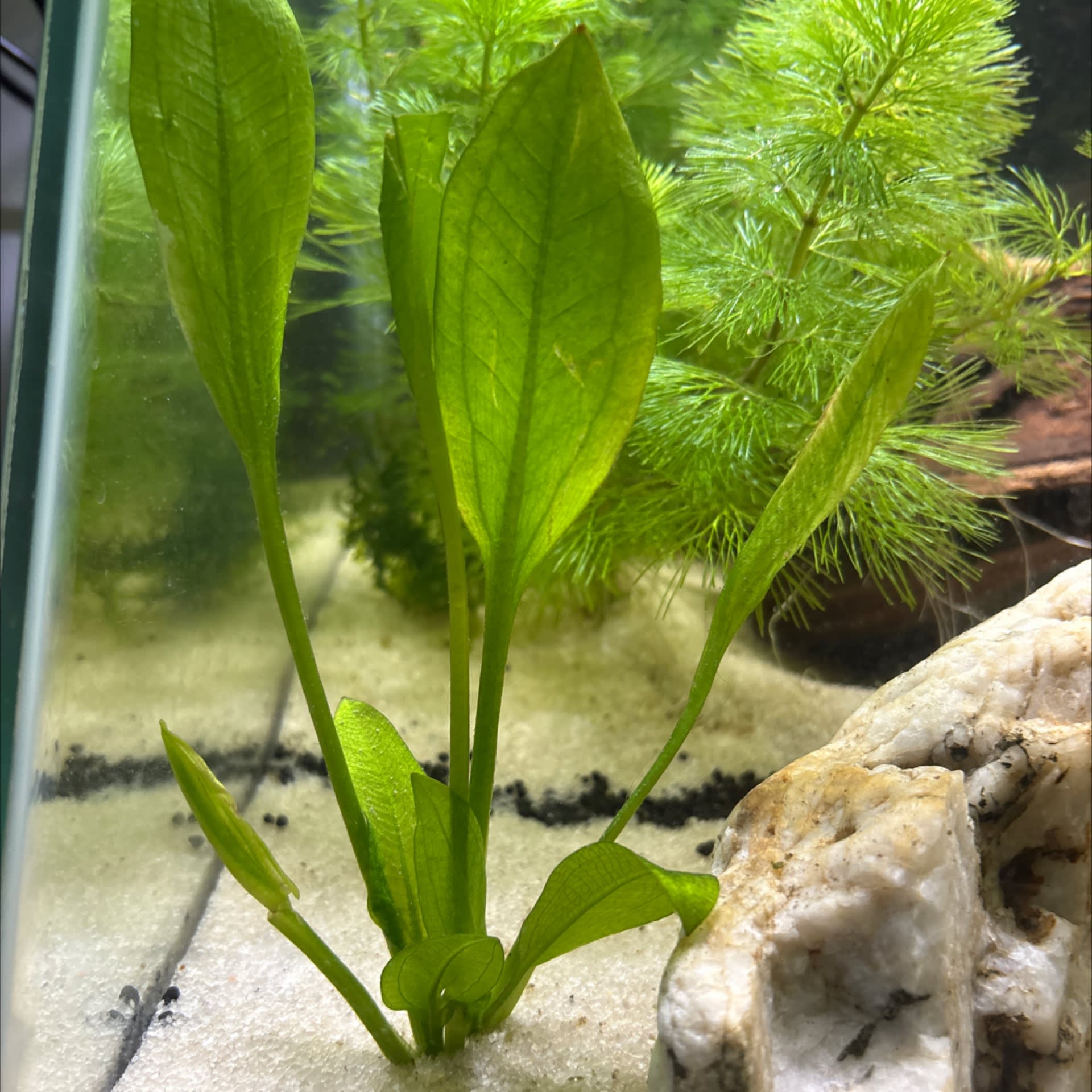
Narrow Leaf Chain Sword
Helanthium bolivianum 'Quadricostatus'
Also known as Quadricostatus, Chain Sword, Narrow Leaf Sword, Ruffled Sword, Echinodorus quadricostatus, Helanthium bolivianum quadricostatus
Plantae›Tracheophyta›Liliopsida›Alismatales›Alismataceae
📍 South America
Narrow Leaf Chain Sword is a hardy, easy carpeting and foreground plant with slender, spade-shaped green leaves — narrower and more compact than the broad-leaf chain sword. It spreads readily by runners that form connected “chains” of plantlets, knitting into a lush low carpet or foreground band. Beginner-friendly and undemanding: it grows without CO₂ under low-to-medium light, though nutrient-rich substrate, added CO₂, and brighter light produce a denser, faster-spreading carpet. Formerly classified as Echinodorus bolivianus var. quadricostatus.
Keep Narrow Leaf Chain Sword? Log your tank and get a health score for it.
Community Photos
0 photosPhotos are added when members log a tank with this species and upload a photo in their tank journal. Add your own tank to contribute.
No photos yet — add a tank with Narrow Leaf Chain Sword to be the first!
Sign in to vote.
Compatible Livestock
See all 4 →Non-destructive; helps control algae without uprooting plants
Small, peaceful algae eater that won't disturb the carpet
Peaceful schooling fish that adds visual contrast without harming plants
Pairs well as a complementary carpeting/midground plant with similar care
Common Diseases
Melt on Transition
Leaves turn translucent, mushy, and dissolve within days of planting; typical when moving from emersed to fully submerged growth.
Trim affected leaves; keep parameters (pH, temperature) stable; provide adequate light and nutrients; be patient as new submerged growth emerges.
Iron Deficiency (Chlorosis)
New leaves appear pale yellow or white while veins stay green.
Dose chelated liquid iron; ensure macronutrient balance to improve iron uptake; raise light if deficient.
Algae Overgrowth on Leaves
Green, brown, or black algae coating leaf surfaces; stunted growth.
Cut photoperiod to 8–10 hrs; increase water changes; add algae eaters (Amano Shrimp, Otocinclus); improve flow.
Nutrient Deficiency (Macronutrient)
Stunted growth, yellowing older leaves, weak runner development.
Dose an all-in-one liquid fertilizer or macro supplement; use nutrient-rich substrate or root tabs; increase water-change frequency.
Tips from the community 💡
0 tipsReal experiences, care advice, and keeper notes. Finn learns from these too.
Sign in to share your experience.
No community tips yet — be the first to share your knowledge!
Quick Facts
- co2
- not required
- lighting
- low to medium
- placement
- foreground to midground
- substrate
- Root feeder; thrives in nutrient-rich substrate or aquasoil but tolerates inert gravel with root tabs and liquid fertilizers; spreads horizontally by runners.
- growth rate
- moderate
Water it likes
- ph
- 6.0-7.5
- ammonia
- 0 ppm
- nitrate
- <20 ppm
- hardness
- 3-15 dGH
- temperature
- 68–82°F (20–28°C)
Legality
No state or federal restrictions on record for this species.
Not legal advice, and possibly incomplete or out of date. Rules vary by state and locality and change over time — always confirm the current regulations with your state wildlife or agriculture agency before buying, keeping, or shipping this species.